

A handbag has never been just an accessory. It has always carried more than its contents, money, access, movement, intent. How a bag is worn, held, or hidden has long reflected how freely someone could move through the world.
The history of handbags is shaped less by trends and more by turning points: when pockets disappeared, when travel became common, when women began spending more time in public life with fewer places to hide what they carried.
Each shift forced the bag to change in size, structure, and visibility. What began as a tool worn close to the body became something carried in the hand, and eventually something designed to be seen. Over time, the bag moved from necessity to signal, from private function to public expression.
In this article, we trace the history of the handbag through key moments that shaped how bags are worn, used, and understood today.
Prehistory to Antiquity (c. 38,000 BCE – 500 CE): Carrying What the Body Couldn’t

Replica of the oldest known purse-like pouch was found with Ötzi the Iceman (c. 3350–3105 BCE). Source: Reddit
The earliest bags were purely functional. Fibre pouches and leather sacks were used to carry food, tools, and personal items, worn close to the body to allow movement without restriction.
One of the earliest physical examples of this comes from Ötzi the Iceman (c. 3350–3105 BCE), whose remains were discovered with a purse-like leather pouch attached to his belt. It held small tools and essentials, reinforcing the idea that early bags existed to support daily survival rather than appearance.
As currency emerged, bags adapted. Drawstring purses appeared to hold coins, typically worn at the waist. These early forms established ideas that still shape handbags today: portability, security, and ease. At this point, bags were not about fashion or gender. They were practical objects, unremarkable, necessary, and built to move with the body.
Medieval Europe (c. 500–1400): Bags Become Visible

Man's Purse, 14th Century, Los Angeles County Museum of Art, Public domain, via Wikimedia Commons. Source: Maiook
In medieval Europe, bags moved into view. Leather purses were worn externally, hung from belts or girdles, often finished with embroidery or metalwork. What you carried, and how it was made, signalled wealth, trade, and social position.
These bags were practical but expressive. They held money and small personal items, yet their decoration mattered. Importantly, carrying was not hidden or gendered in the modern sense. Bags were part of the dress, not accessories added after the fact. This period marks a shift as the bag begins to communicate status, not just function.
14th–17th Century: Hidden Pockets and the Disappearance of the Bag

1784. Source: MetMuseum
As clothing became more structured, storage moved inward. Women wore tie-on pockets beneath their skirts, accessed through slits in dresses. These pockets held everyday necessities but remained unseen.
During this period, carrying still happened, but privately. Bags were no longer part of the visible silhouette. What a woman carried was deliberately concealed, reinforcing the idea that personal items, like personal space, should stay out of sight. This matters because it temporarily removes the bag from public life, setting up its eventual return.
Late 18th Century (c. 1790–1820): The Reticule Brings the Bag Back

Reticule, 1820-1830. Courtesy Centraal Museum
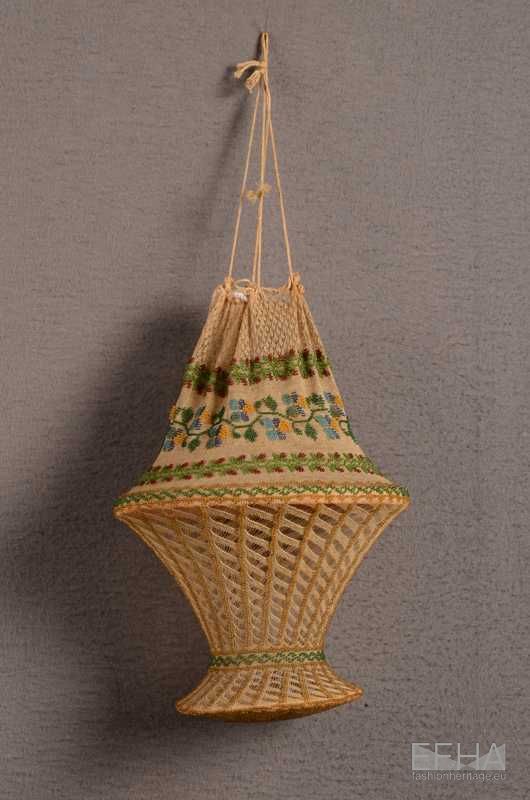
Fashion forced the bag into view again. As dresses became slimmer, hidden pockets were no longer practical. The solution was the reticule, a small purse carried by hand or wrist.
Unlike earlier bags, the reticule was designed to be seen. It held very little, but its presence mattered. Carrying was now part of the silhouette, not something concealed beneath it. This moment marks a turning point, where the bag returns to public life. No longer hidden, and firmly tied to appearance.
Early 19th Century (c. 1800–1850): Travel Changes the Shape of the Bag
Industrialization changed how people moved. Trains and steamships made travel more common, and personal items needed to stay close at hand.
Bags became sturdier and more structured, borrowing from luggage design. Leather, frames, and secure closures appeared, shifting the bag from soft pouch to purposeful object. This period begins to shape the handbag as we recognize it today, built for both movement and decoration.
Mid–Late 19th Century (c. 1850–1900): The Modern Handbag Takes Form

Gladstone bag, Darbyandjoan1 at English Wikipedia, Public domain, via Wikimedia Commons. Source: Maiook
As public life expanded, so did the need for personal storage that could move easily through it. Women travelled more, walked more, and spent longer days outside the home. Bags adapted accordingly.
Personal bags became part of luggage sets, designed to be carried rather than worn. Handles, clasps, and reinforced shapes made them practical for daily use. These bags were still understated, but they were clearly intentional. By the end of the century, the handbag had shifted from necessity to object, no longer hidden, no longer temporary, but designed to last.
Early 20th Century (c. 1900–1930): The Term Handbag Came Into Our Lexicon
The word “handbag” entered common use in the early 1900s. It was first applied to men’s hand luggage, not women’s accessories. As personal bags grew larger and more structured, the term shifted with them.
Once bags were designed to be carried in the hand, rather than worn at the waist or hidden under clothing, “handbag” became the most practical description. The language followed the behavior. This time in the history of the handbag matters because it reflects a broader change. Bags were no longer incidental. They were recognized as distinct objects, designed for daily life and meant to be seen.
1920s–1940s: Independence, Work, and Utility
As cities grew and women’s lives expanded beyond the home, handbags had to keep up. Work, shopping, and social life demanded more space and better organization.
Bags became larger and more practical. Compartments appeared. Closures became more secure. Design shifted away from decoration and toward function, reflecting longer days and greater independence.
During wartime, material shortages reinforced this focus. Bags were made to last, not impress. Utility took priority, and in doing so, reshaped the handbag for modern life.
1950s–1970s: Structure, Glamour, and the Bag as Identity

1957 purses. Source: Vintage Dancer
Post-war prosperity brought polish back to handbags. Structured shapes, refined materials, and considered proportions dominated, reflecting a renewed focus on presentation and control.
Bags became part of how women were seen. A top-handle suggested formality; a shoulder bag signalled ease. By the 1960s and 70s, silhouettes softened again, mirroring cultural shifts toward movement, freedom, and self-expression. The handbag had become a visual language.
1980s–2000s: The Bag Becomes a Cultural Symbol

Source: Vogue
The handbag entered the spotlight. Power dressing in the 1980s gave bags structure and authority, while branding turned certain silhouettes into instant signals of status.
By the 1990s and early 2000s, pop culture accelerated everything. A single bag could define a moment, a character, or a decade. Logos, waiting lists, and resale value reshaped how bags were perceived, not just as accessories, but as cultural objects. Yet even at peak visibility, the bags that endured shared familiar traits: balance, comfort, and usefulness. Function remained.
2010s–Today: Function Returns, Values Shift
Modern handbags reflect modern lives. Phones reshaped interiors. Commuting favored cross-body styles. Comfort, weight, and wearability began to matter as much as appearance.
At the same time, values shifted. Longevity, materials, and responsibility entered the conversation. The bag was no longer judged only by how it looked, but by how it was made and how long it could stay in use. In many ways, this moment feels like a return. Design has moved back toward purpose, refined, considered, and built to support real days.
Meet Sattaché, the Modern Handbag You Never Knew You Needed

The Sattaché Classic Bag is designed for the realities that handbags have always responded to: movement, long days, and the need to carry more without being weighed down by it. Where the timeline above shows handbags evolving as women’s lives expanded beyond the home, Sattaché picks up at the present moment: work that stretches into evenings, travel folded into everyday routines, and fewer clear boundaries between settings.
Here are some of the reasons you’ll love it:
-
It has a built-in shoe compartment that is perfect for the modern woman who is always on the go. Trainers, heels, or flats stay separate, discreet, and out of the main interior.
-
Designed for work and travel in one bag. Sattaché was created to replace the need for switching bags throughout the day, whether you’re commuting, heading to meetings, or catching a flight.
-
Five ways to wear it, so it adapts to how you move. Carry it by the top handle, wear it on the shoulder, style it crossbody, wear it higher or lower depending on the strap, or carry it open as a structured tote.
-
Made from PETA-approved vegan leather, chosen for durability, structure, and finish. It gives the look and feel of leather, without compromising on ethics or longevity.
-
A clean, structured design that holds its shape when in use, so it looks considered whether you’re carrying the essentials or packing it out for the day.
Rather than reinventing the handbag, Sattaché refines what history has already proven works. It’s a bag designed to be carried repeatedly, across changing contexts, and to remain relevant through use.
Explore the Sattaché collection and find the bag designed to move with your day.
FAQs
Who invented the purse?
There isn’t a single inventor in the history of bags. The purse evolved over thousands of years as a practical response to carrying money and personal items. Early versions appeared independently across cultures, shaped by trade, clothing, and daily movement rather than by one designer or moment.
When did women start carrying purses?
Women began carrying purses visibly in the late 18th century, around the 1790s, when fashion shifted to slimmer dresses that could no longer conceal tie-on pockets. This led to the rise of the reticule, a small, hand-carried purse, marking the first time women’s personal items moved into public view as part of the outfit rather than being hidden beneath it.
Where did the term handbag come from?
The term handbag came into common use in the early 20th century and was originally used to describe men’s hand luggage rather than women’s accessories. As personal bags became larger, more structured, and designed to be carried in the hand rather than worn at the waist or hidden under clothing, the word naturally shifted to describe women’s bags as well.
Sources